
Introduction
With the increasing demand from consumers for health-promoting nutraceuticals and low side effect medications, plant-derived bioactive ingredients have garnered increasing attention due to their potential health benefits and suitability for incorporation into functional foods and dietary supplements. Pterostilbene owns excellent physiological activities including antioxidant and anti-inflammatory activities. However, poor water solubility, weak chemical stability and low bioavailability greatly limit its practical application in functional foods and nutritional supplements. Recently, protein-polysaccharide composite nanocarriers have attracted extensive attention for encapsulating hydrophobic bioactive ingredients due to their biodegradability, safety and biocompatibility. In this study, pea protein isolate-fucoidan-quaternary ammonium chitosan (PPI-FU-QAC) complex nanoparticles were constructed via two-step assembly to encapsulate pterostilbene, and the intermolecular interaction mechanism, colloidal properties, physicochemical stability, in vitro antioxidant activity, gastrointestinal release behavior and intestinal permeability of the nanocarriers were systematically explored. The research results have been published in “Food Hydrocolloids” with the title “Encapsulation of pterostilbene in pea protein isolate-fucoidan-quaternary ammonium chitosan complex nanoparticles to enhance its stability, antioxidant activity and intestinal permeability” by researchers from JAAS.
Conclusion
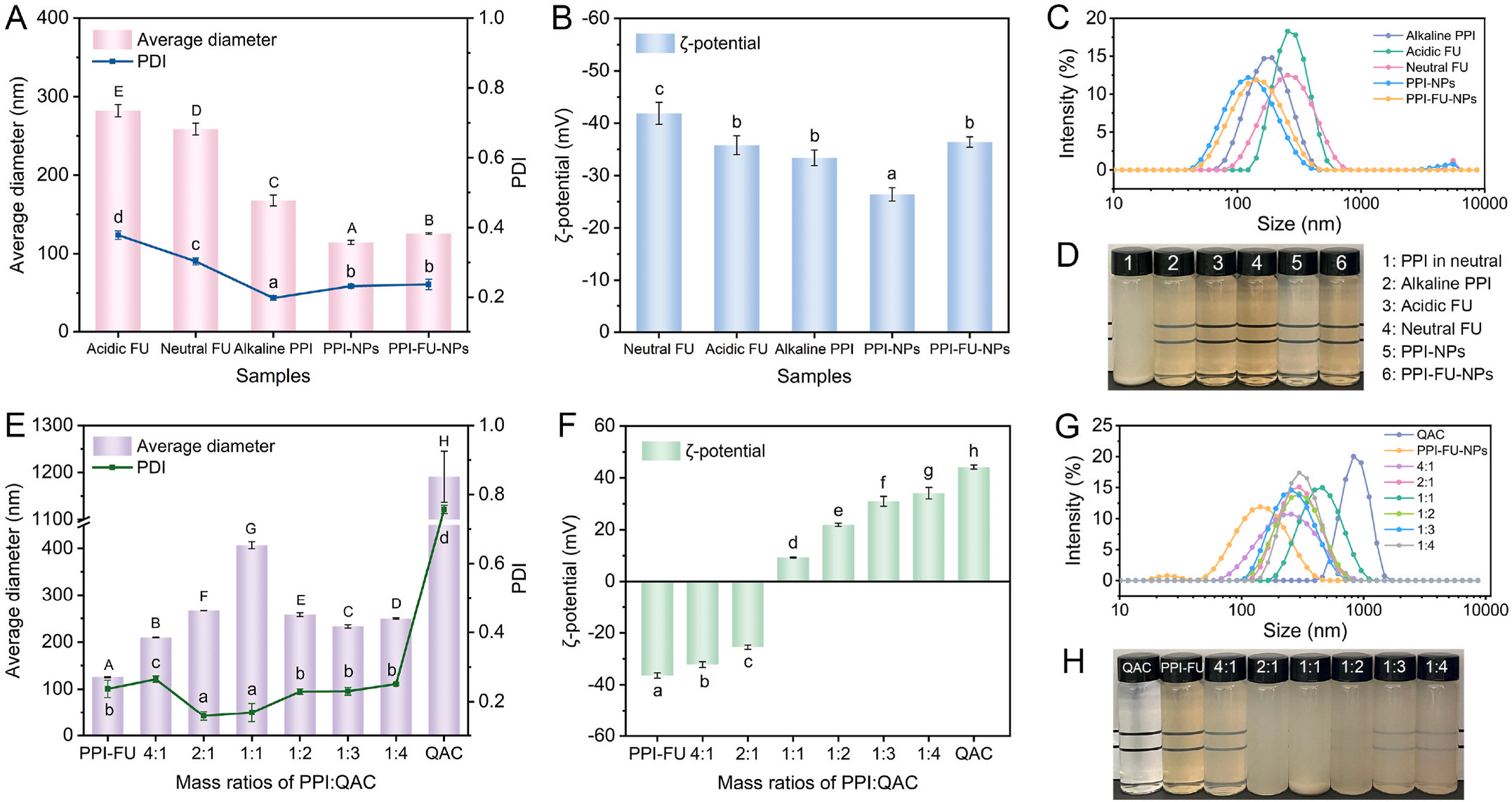
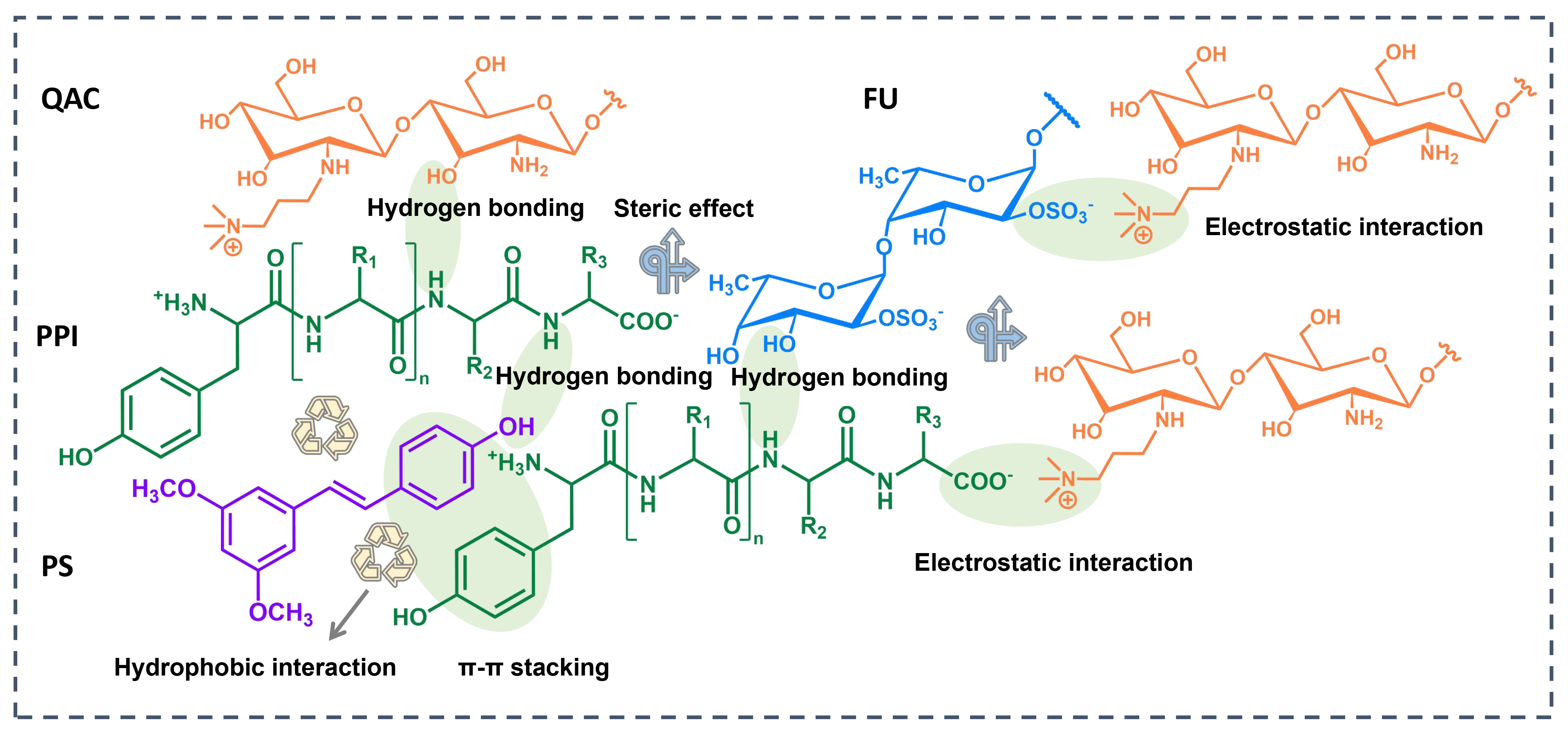
This study has successfully fabricated stable and homogeneous ternary nanoparticles as a novel delivery system for pterostilbene (PS). The optimal PS-PPI-FU-QAC-NPs were prepared at PPI:FU:QAC:PS mass ratio of 1:0.5:3:0.1, resulting in a nanoscale spherical structure, uniform distribution, typical colloidal particle properties (average diameter of 244.2 nm and ζ-potential of 31.3 mV), and relatively high EE (95.5%) for pterostilbene. The self-assembly of complexes was dominated by hydrophobic, hydrogen-bonding, electrostatic, and steric interactions. As expected, the incorporation of FU and QAC increased the physicochemical stability, biological activities, and intestinal permeability of PS-PPI-NPs. PS-PPI-FU-QAC-NPs displayed exceptional colloidal stability under pH range of 2.0–8.0 and NaCl concentration up to 2.0 mol/L. Meanwhile, PS-PPI-FU-NPs and PS-PPI-FU-QAC-NPs demonstrated superior pterostilbene retention under UV irradiation and thermal conditions, as well as modulated the release behavior of pterostilbene during simulated gastrointestinal digestion. Furthermore, PS-PPI-FU-QAC-NPs exhibited higher free radical scavenging capacity and intestinal permeability for pterostilbene in Caco-2 cell monolayer. In summary, this study developed an innovative and stable delivery system using PPI, QAC, and FU to encapsulate, protect, and deliver pterostilbene, offering valuable insights for potential applications of bioactive ingredients in the functional food and nutraceutical industries.
Innovativeness
This work developed a two-step assembly strategy to fabricate bilayer-coated protein nanoparticles using food-grade pea protein isolate, fucoidan and quaternary ammonium chitosan for pterostilbene encapsulation. The dual polysaccharide coating significantly improved the pH, ionic, thermal, and UV stability of nanoparticles and encapsulated pterostilbene. Meanwhile, the delivery system modulated the in vitro release behavior and enhanced the antioxidant capacity as well as intestinal permeability of pterostilbene. Benefiting from naturally derived materials and excellent biocompatibility, the developed system establishes an innovative green delivery platform for hydrophobic bioactive ingredients and broadens the potential applications of pterostilbene in functional food and nutraceutical fields.
Read more: https://doi.org/10.1016/j.foodhyd.2025.111168